IVF Success Rates
We are very proud to say Flinders Fertility's IVF success rates are the highest in South Australia, and sit well above national averages as shown in independently audited data. Our data includes all patients irrespective of the number of treatment cycles, BMI, lifestyle, treatment regimen, or blastocyst grades.
Many factors such as age and lifestyle can influence the chance of success, which is why a Flinders Fertility specialist will provide every patient with an honest and realistic indication of the likelihood of conceiving per treatment cycle depending upon individual circumstances and the specific treatment recommended.
It is important to note that, unfortunately, not every treatment cycle will result in an egg collection, embryo transfer, or having embryos to freeze, which is why treatment costs should be a major consideration before commencing fertility treatment.
We believe it is important that people seeking fertility services can make informed decisions about their treatment and their provider of choice. For this reason, we publish the most recent independently verified data from Your IVF Succcess, which we have reproduced below. YourIVFSuccess is independently published data from the University of New South Wales, showing the success rates of each clinic around Australia compared to the national average. The publication of this data is voluntary, and please note that many competitor clinics do not show their clinic-level data on their websites, but instead use an average across clinics in their group.
This data is presented using 5 key measures:
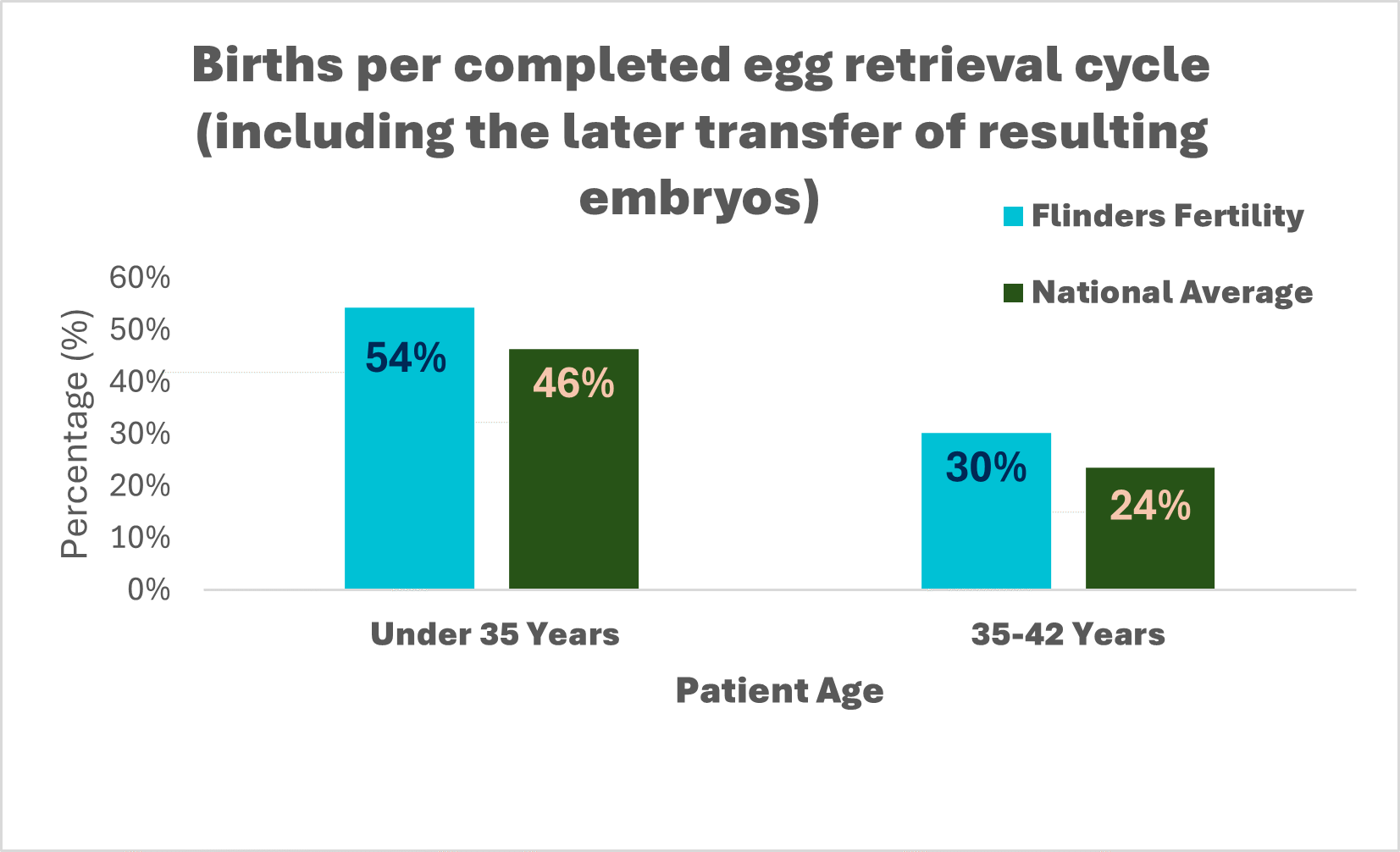
Births per complete egg retrieval cycle (including the later transfer of resulting embryos)
This measure shows the chance of a live birth from fresh and frozen embryo transfer procedures resulting from each complete egg retrieval cycle that was performed in one year at Flinders Fertility. Often more than one embryo is created from the eggs collected during an egg retrieval cycle, and these can be transferred over many months as part of one or more embryo transfer procedures (for example, one fresh embryo transfer followed later by one or more frozen embryo transfers).
Because this measure provides the overall chance of having at least one baby from an egg retrieval cycle, it helps you understand our success rate from a complete IVF treatment cycle rather than each embryo transfer. It also accounts for differing scientific and clinical practices among clinics. Sometimes, no embryo transfer procedure takes place because a suitable embryo is not available following the egg retrieval. A minimum of one year and a maximum of two years of follow-up is included to capture most embryo transfers associated with an egg retrieval procedure.
The rate is calculated as the number of live births divided by the total number of egg retrieval procedures during the treatment year performed in this clinic. It only includes cycles where a woman used her own eggs.
The national rate is based on all complete egg retrievals undertaken in Australia in the same year and followed for a maximum of two years.
Egg retrieval procedure year: 2022
Embryo transfer year(s) 2022 & 2023
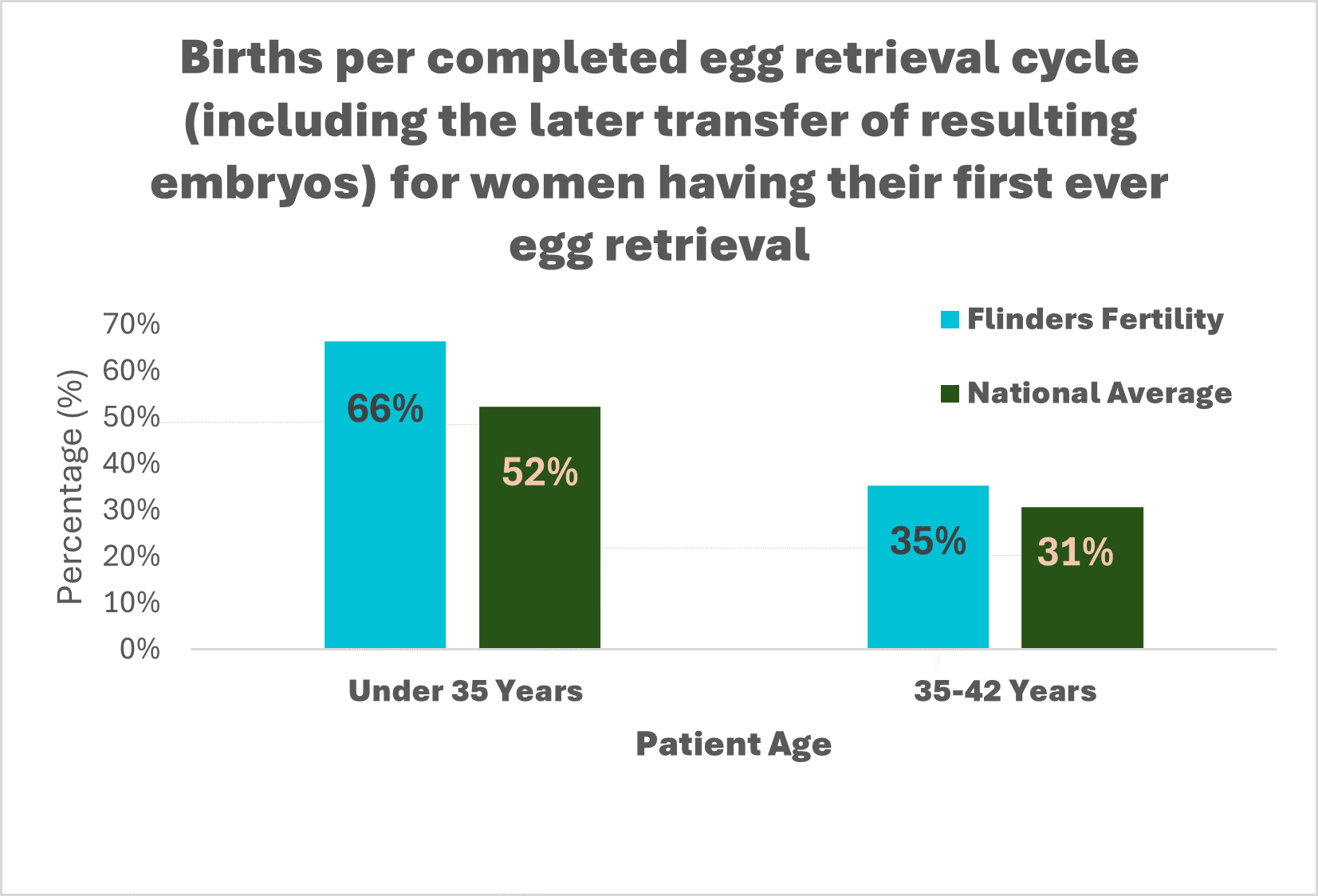
Births per complete egg retrieval cycle (including the later transfer of resulting embryos for women having their first cycle)
This measure shows the chance of a live birth from fresh and frozen embryo transfer procedures following each complete egg retrieval cycle for women undergoing their first-ever egg retrieval in one year at Flinders Fertility and excludes women who have previously had IVF cycles at other clinics.
Often more than one embryo is created from the eggs collected during an egg retrieval cycle, and these can be transferred over many months as part of one or more embryo transfer procedures (for example one fresh embryo transfer followed later by one or more frozen embryo transfers).
Because this measure provides the overall chance of having at least one baby for women having their first ever egg retrieval cycle, it helps you understand a clinic’s success rate for women new to IVF. It measures births from a complete IVF treatment cycle rather than each embryo transfer. This provides a better indication of a clinic’s overall success rate for these women and accounts for different scientific and clinical practices among clinics.
The rate is calculated as the number of live births divided by the total number of first-time egg retrieval procedures in this clinic during the treatment year. It only includes cycles where a woman used her own eggs. The national rate is based on all complete egg retrievals to first-time IVF patients undertaken in Australia in the same year and followed for a maximum of two years.
Egg retrieval procedure year: 2022
Embryo transfer year(s) 2022 & 2023
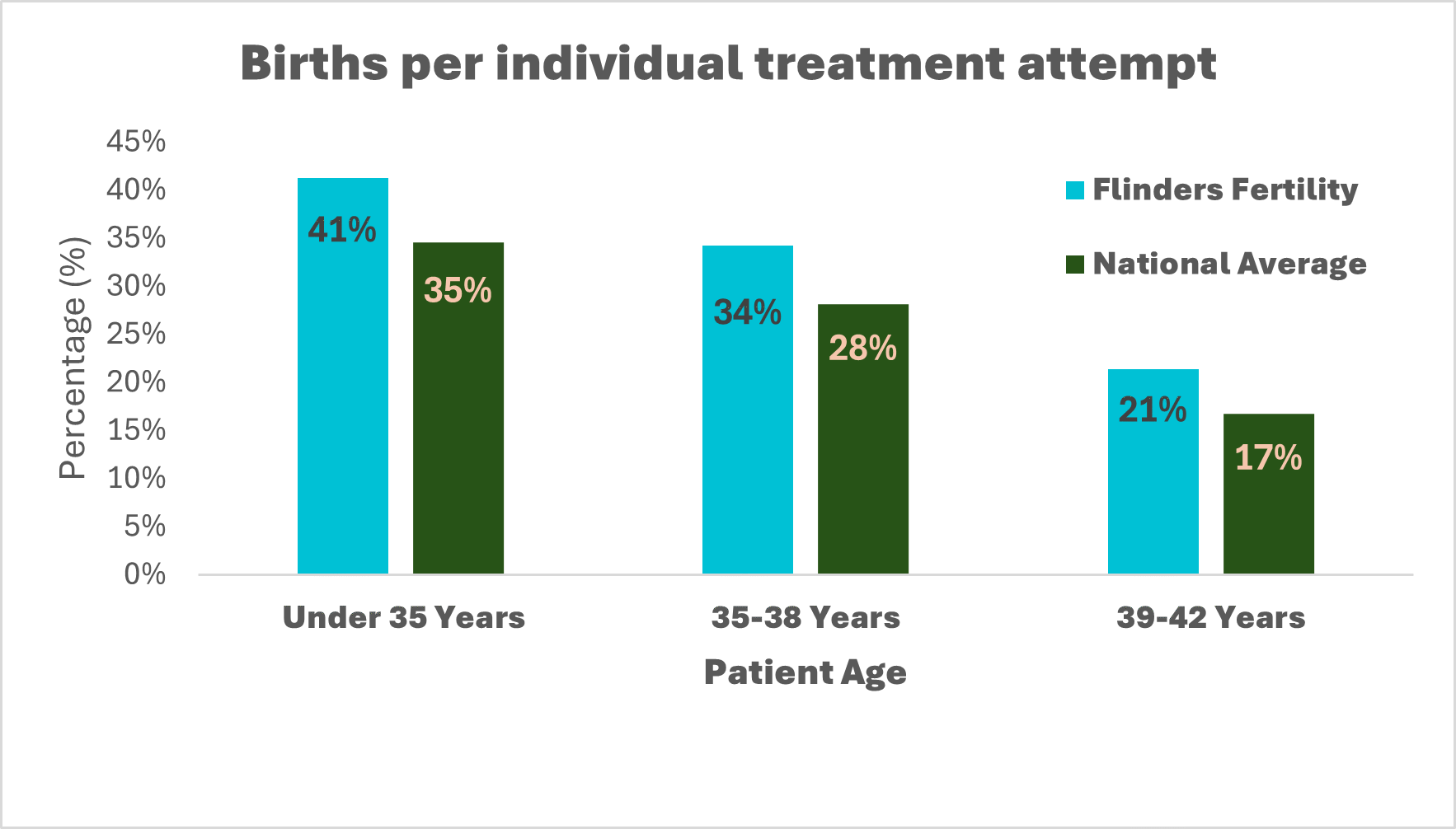
Births per individual treatment attempt
This measure shows the chance of a live birth from each treatment attempt involving an intended embryo transfer that was started in one year at Flinders Fertility. This measure gives you a good overall indication of the success rate from single treatment attempts.
The success rates for intended fresh and frozen embryo transfers are reported together because the decision to transfer a fresh or frozen embryo varies with different clinical practices and each attempt could result in a live birth.
The success rates for intended fresh and frozen embryo transfers are reported together because the decision to transfer a fresh or frozen embryo varies with different clinical practices, and each attempt could result in a live birth.
Treatment year: 2023
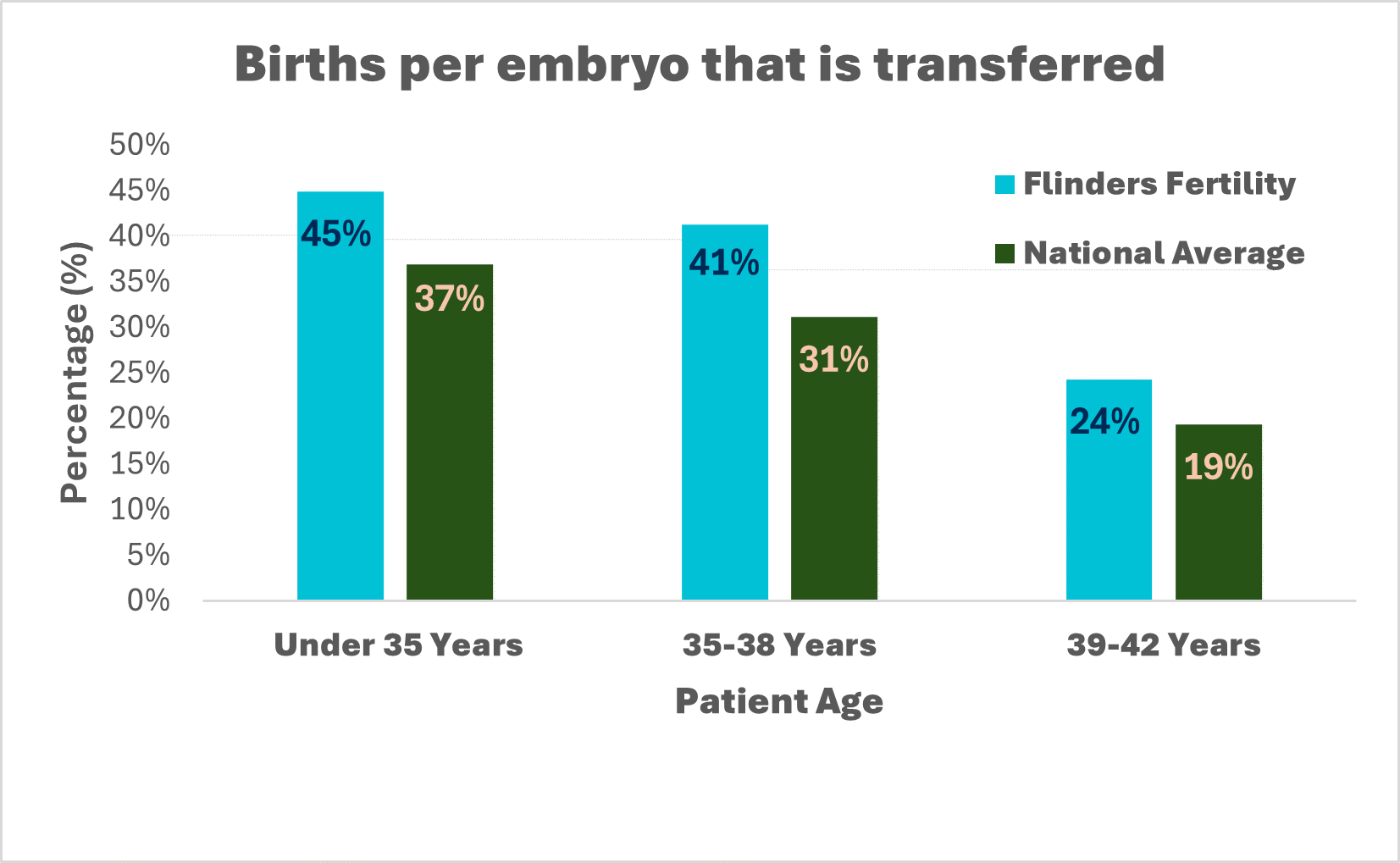
Births per embryos transferred
This measure shows the chance of a live birth from each fresh or frozen embryo that was transferred in one year at Flinders Fertility. This measure expresses the success rate from the perspective of the embryo and tells you how likely it is that each embryo that is transferred will end up as a birth.
This measure promotes single embryo transfer because if two or more embryos are transferred at the same time, this dilutes a clinic's success rate regardless of whether a singleton baby or twins are born, because a birth is only counted once. This is important because transferring more than one embryo during IVF increases the risk of having twins and triplets, which increases the chance of serious health risks, including death, for mothers and babies.
This rate is calculated as the number of clinical pregnancies divided by the total number of individual treatment attempts performed during the treatment year at this clinic. It only includes cycles where a woman used her own eggs. The national rate is based on all individual treatment attempts undertaken in Australia in the same year.
Treatment year: 2023
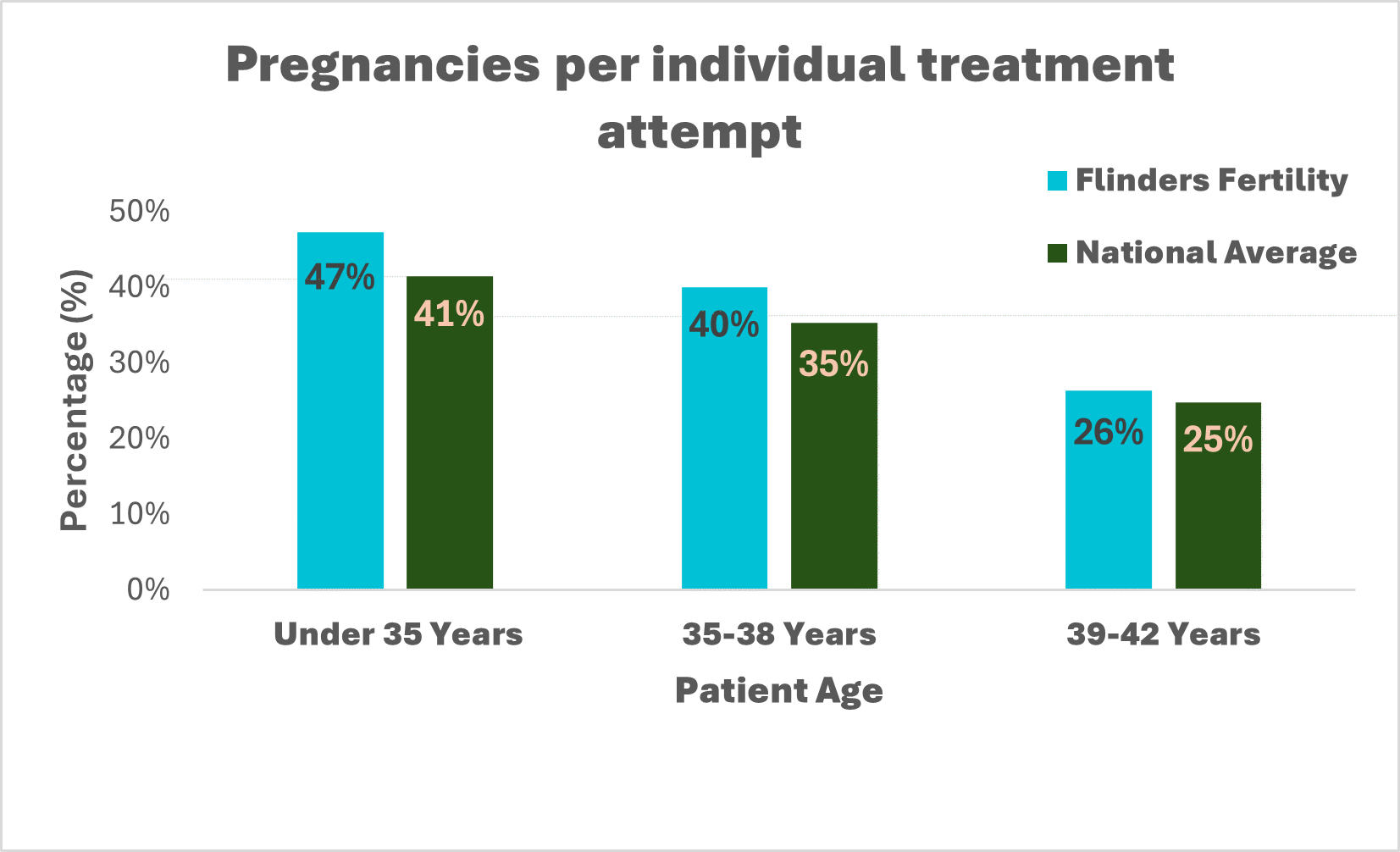
Pregnancies per individual treatment attempt
This measure shows the chance of a pregnancy from each treatment attempt involving an intended embryo transfer that was started in one year at Flinders Fertility. The pregnancy rates for intended fresh and frozen embryo transfers are reported together because the decision to transfer a fresh or frozen embryo varies with differing clinical practices, and each attempt could result in a live birth.
Treatment year: 2024
Fertility news
For more information on fertility and how to prepare for pregnancy, check out our articles below